Tuesday, June 19, 2012

What's in a name?

The plants that came in simply labelled "Rhodochiton" - the one I have planted in my large pot with the twig obelisk - has bloomed in the greenhouse. It's breathtaking.
Our rhodochiton is wet - like everything else in gardens this year. The rain, the rain, the rain, then heat & humidity, then rain.. has been great for leafy things and leaf eaters, ....but things in pots aren't drying out enough between downpours and that's making life.. interesting. I have this guy in a very sunny spot on the back deck, one of the hottest spots, getting sun from mid-morning until it falls over the Port Arthur Ridge in late evening. Hopefully we'll see some blooms soon. 

A little history of the synonym of names Rhodochiton & Lophospermum:


The Lophospermum plants at Vanderwees are what I'm most familiar with (seen below). There was a time when I couldn't imagine my annual garden season without one - though I should mention that Jean has kept one alive for years by cutting it back and taking it in at the end of the season. This one has larger leaves than 'Purple Bells', and long mauve trumpet flowers.
'Lophospermum'
 Rhodochiton 'Purple Bells'

I love them all. I love the way this vine tendrils, the blossoms on every one - it's a beautiful plant. One of the more vigorous climbers (and trailing plant) I know - for an annual here. It puts on a great show where ever is grows.

Dirty Ladies, Mystery of the Plant

Laura and I reintroduced ourselves recently - we've been neighbours (a house apart) now for three years, and have been spying over each other's gardens just as long. We've talked before, but it wasn't until the a few weeks ago - one evening when I was recovering in the shade on the front balcony with a glass of wine, and I yelled down to Laura to ask if she wanted a mugo pine. I was already half in my nightwear - a skimpy tank-dress, but with some garden grubs beneath, still with  dirty hands. I had no business being out of the privacy of home, but I went downstairs and out front with my glass of wine to talk without yelling over the neighbour. Laura was in her comfortable clothes too, and we both agreed we didn't care. 
We talked over my garden for a while, then we went to her garden for a while. She told me about Marla's garden, of which I've already heard enough about to be in jealous awe. We decided to peek over the fence, and following Laura's lead climbed a little hill in the back lane to get an even better view - at which point Marla, who was working in her garden, saw us, and instead of reporting two nosey gardeners to the police, invited us in and brought out a bottle of Riesling. This was the first meeting of The Dirty Ladies (named so by Laura...HEEHEE).

Marla was definitely the most dirty, and no wonder - her garden is a wonderland. Tulips were blooming, the sun was setting through the apple blossoms, alliums rising. The visit inspired me. Both her and Laura are growing Kiwi vines - which I informed R later that evening that we would be adopting some Kiwi's as soon as the soffits are in place on the back balcony (removing the horrible drip line that ruins a foot and a half of the little kitchen garden). 
After taking the garden tour back through Laura's garden, to mine again, the meeting was adjourned. It reminded me of year ago when Caroline, Shelly and I would walk barefoot from one another's gardens with summer drinks in hand.

I was in our backyard garden then other night when Laura yelled over the neighbour's yard - she had something to show me, so I invited her over. Dressed again in our garden skimpies, the Dirty Ladies stood and stared at a tall picked plant, slightly shrivelled. A mystery plant, unidentified from a friend's cottage - once a Finlander's land. She said it reminded her of a tobacco plant, maybe coffee plant. ? Tall and wild, hardy and perennial. It's surrounded by organized plants - once a garden, long overgrown, so likely something someone put there. 

From it's shrivelled condition and not having a photo I could only guess curly dock, but now that I see the photos it's obviously not. I'm with Laura that it is some kind of tobacco plant. ??? Maybe? She sent me the photos by email yesterday, which I received while still at the greenhouse - I went through every book and plant person there yesterday, nobody could say for sure. 

I pose the question of identity to the interweb sources now. Does anybody know what this is?
Mystery  Plant

Thursday, June 14, 2012

beneficial bugs and some jerks

Coccinellid
Lady Beetle
on my mesclun

Also on my mesclun this morning was a not so beneficial bug, 
a little cabbage looper munchin' on a leaf.
This is the year of the pests (and not the four legged kind that also sleep in our bed). Cutworms got two tomatoes and part of a row of radishes, not to mention kale leaves one by one. Aphids almost got the better of John Davis, but I took care of that - along with a colony of jerks ants left behind after the removal of the mugo pine and potentilla. Boiling water, cinnamon, and a little bit of commercial spray. I am going to win.

Blueberries in the Home Garden


As I was taking photos of the blueberries and muffins H said to me:
normal families don't have to wait until the photoshoot is over to taste test.
Understood, but I think it was worth the wait.

originally compiled for Bill Martin's Nurseryland:
Blueberries are categorized in the same genus as cranberries, Vaccinium, in the section Cyanocuccus. Bushes are long-lived, with a lifespan similar to fruit trees, and boast ornamental value with their delicate bell-shaped flowers in spring and fiery foliage in autumn.

Low-bush blueberries or half-high blueberries are better suited to colder regions of Ontario, like Thunder Bay, and benefit from a good snow cover for insulation throughout the winter.

Blueberries prefer full sun, although the plants will tolerate partial shade; though in shade the bushes produce fewer blossoms and fruit production will decline.

Blueberries prefer acidic, well drained, loose soils rich in organic matter. Blueberries grow best at a pH of 4.2 to 5.0. You can reduce your soil pH by mixing in acidic sphagnum peat moss or by mixing in compost made from pine needles, oak leaves and/or bark, and work nutrient-rich compost into the top few inches of soil.

Iron deficiency is common when the soil pH is too high. A simple way to diagnose an iron deficiency is by examining the leaves of your blueberry bush.  Young leaves are a lighter green than older leaves and often have a slight reddish tint. When deficient in iron, young leaves become pale yellow and stunted, and plant growth is poor.

Blueberries have a very fine root system, susceptible to suffocation if saturated. Organic matter improves soil aeration and drainage while retaining moisture and nutrients. Avoid planting in low-lying locations as they may be poorly drained and prone to frost.

When planting, spread out the roots and cover them with soil, firming the soil around the roots being careful not to cause breakage. Do not let the fine roots dry out in the process; water the bushes thoroughly after planting. Blueberries respond well to trickle or drip irrigation.

Blueberries like phosphorus and potassium, but not potash.

Birds find blueberry fruit very attractive, so netting and movable garden ornaments can be used to deter them.

Often harvested too early, blueberries should be allowed to turn completely blue. Leave them on the bushes for 3 to 7 days to develop their full flavor and sugar content.

Blueberries are versatile, delicious fresh or frozen, baked in pies and muffins, served in salads, or eaten with ice cream. They are easily stored, canned, and made into jams & preserves.
Blueberries have a diverse range of micronutrients, with high levels of essential dietary minerals such as manganese, vitamin B6, vitamin C, vitamin K and dietary fiber. They contain anthocyanins, antioxidant pigments, and various phytochemicals, known for countless health benefits.

Northwestern Ontario Hardy Blueberries:

Northblue - was developed at the University of Minnesota to withstand harsh winters. It is a low-growing, self-pollinating, small blueberry bush, perfect for the home garden. Fruit is dark blue & large, with sweet flavor. It has glossy, dark-green leaves that turn bright red in the fall.

Northcountry - is another from the University of Minnesota breeding program. A half-high bush (45 to 60 cm) that produces sweet, light-blue blueberries.

Northland - is a hardy low-bush cultivar known to be high producing in long clusters in mid-season. Berries are medium in size, dark blue, and have excellent flavour.

Patriot - is a small but very productive blueberry bush that is both hardy and vigorous. The fruit clusters are tight, with large, medium blue, firm berries with great flavour.

Chippewa  - is an extremely hardy arctic blueberry plant that grows to a height of 3 feet. Fruit are medium to large and high producing. Berries are favoured for their firmness, attractive color and delicious flavour.

Tuesday, June 12, 2012

web pearls

a spider's web on our front balcony
after the rain
10 June 2012

Pollinators & Pests in the Vegetable Garden

Achillea millefolium
Apricot Delight Yarrow
& white cosmos
For the pollinators I planted yarrow in a pot with some cosmos and pansies. It's sort of weird, but I wanted the yarrow for the butterflies & hummingbirds, but not to spread throughout the vegetable bed in our small(ish) garden yard. Weird but pretty, and as the plants start to fill out (after living in tiny pots) it's growing into a beautiful arrangement marking a corner of the bed. 
Rhodochiton / Lophospermum
climbing the twig trellis
vegetable garden in the background


The herb garden is growing in with some in the ground and others in pots. I'm hoping that by varying the heights of things everybody will have a little more room this year. The little garlic chives which used to grow under the Tamarack are blooming happily in their second year in their new spot; with English Lavender, Lavanda inglesia, & Lavender 'Coconut Ice' near the steps to the back porch.

We have a few sprigs of asparagus appearing,
excellent for being first year transplants.
 Zinnias mark the rows.
Zinnia
Megellan Cherry
It's been a good year so far in our new vegetable bed. Cutworms have taken out some of the radishes, two tomatoes, and some leaves of kale, but they can be sent away with eggshells and coffee grounds and kept under control in a garden this size. Most of the wee carrots washed away in the heavy rain, so I'll have to replant those..., but with the heat, humidity, and deep rainfalls we've had the garden looks lush and unbeatable.
We're really growing into our yard, making it our space rather than someone's adopted garden. Soon there will be no grass anywhere, with our fire pit and outdoor living space surrounded by a garden we planted, and I can't wait. R's rebuilt back fence is beautifully constructed, and so will be the ornamental picket fence surrounding the main garden. I think we've really really found a way to reconcile three dogs in a downtown garden - complete with poop compost, and one for kitchen waste. R's next artistic (and practical) wood working project will be a beehive wormery - another thing I can't wait to have operational. :)
evidence of cutworms and Cliffords
mini dachshund feet are the same size
as radish leaves
who knew

June hostas

hosta 'Sieboldiana Elegans'
& Tiarella, Foam Flower
hostas in the west side garden
hosta 'Striptease'
west side garden
10 June 2012

in the blue pot

Pretty Much Picasso, supertunia
blue & lilac verbena

Sleepy G Farm


On Earth Day, 22 April 2012, we visited Sleepy G Farm - with Marcelle and Brendan, who run this incredible homestead farm on the edge of the Sibley Peninsula near the Sleeping Giant's resting head. The visit was arranged over a story for theWalleye - except theWalleye story was already written and submitted with photos of theirs from previous years. A wild spring snowstorm had interrupted the spring farm story, but I still wanted to visit the farm and take my own shots, and see for myself what they are up to.
It ended up being an unbeatable way to end Earth Day - after a day in the greenhouse planting basil and photographing things growing; new life was all over the farm with babies born before our eyes. I've haven't been able to put it to words...

We got lost on the way out. I was too excited to remember to read (or bring) the directions and was just running on memory from Marcelle's instructions and my image of the farm from photos on their website. Our teenager in the back seat wasn't impressed with our country drive, but I was - there's just something magical about being on the Sleeping Giant.
I admired the farm from the road the first time we passed it, even more so when we drove up to it again. The fields, tilled by oxen, lined the road to the farmhouse and barn, with an irrigation system greeting at the top of the drive.
Met by a friendly farm dog before meeting the farmers, who welcomed us like old friends, I was really surprised at their modest surprise that theWalleye was interested in their story... never mind all the words I wished I could have added to the story. How could we not all be interested in this? Thunder Bay (& area) now boasts a number of these young farms emerging from the landscape with passion and integrity; and its because of people like Marcelle and Brendan that a greater respect for local, ecologically raised food has developed.

I'm glad that both Brendan and I remember the Fort's farm in better days. It deserves that. Even more glad to see his traditional farming knowledge fundamental in their farming philosophy. Simple hard work, ecological farming - people who care about their animals, and the land they live off. They raise Dorper sheep, shorthorn milkers, and field run chickens along with their vegetable gardens.


It was great to see the little chicks; for me an instant flashback to my childhood
 - the smell of the chicken coop, the warming lights on straw, the feed. Hannah was able to hold a chick while I told her what it was like to keep them in the family room growing up, holding them in our laps while we watched television, or letting them run loose in our Lego™ village.

She was also lucky enough to hold a lamb, finally. After years of adoration and only seeing them at places like the Hymer's Fair, or at Featherdale in Australia - here she was on a working farm, seeing sheep being raised for food the way they should be, in the field eating grass, cared for like family. I was happy.


More incredibly, there in the evening sun, as we stood over the oxen yoke talking about farm days at Old Fort William, a ewe gave birth in the yard. Before our eyes an Earth Day lamb was born, and I find it really hard to find the words to describe the sight. It was such a beautiful spring evening; a best memory for sure. 

a new mother and her lamb
moments after birth
on Earth Day 2012
 ewes & babies
spring on the farm

Red and River, the Sleepy G oxen work the farm with Brendan and Marcelle. They are referred to as children, with anecdotal stories of calf-hood and playfulness. Lovely, sensitive animals - they are appreciated greatly for their contribution to the farm.
Red & River
Sleepy G Oxen
Red & River's oxen yoke
at Sleepy G Farm
The irrigation system, cleverly set up to pump fresh water from the creek that runs behind the farmhouse to a raised well near one of the large vegetable gardens, uses gravity to cover the area. The dogs fend off deer and rabbits to the best of their ability, working shifts between belly rubs and long naps. The whole farm is in sync.
onions growing
preparing for transplant
chicks grown up
We left the farm with eighteen of the freshest eggs, and a deep respect for how hard these people work day in, day out all year long. There are no vacation days or sick leave in farming. Their successful CSA program is credit to the extra effort they put into growing great food - organic, healthy, and most of all: fresh. 

You can find them at the Pavilion at Silver Islet every Saturday from 10 am – 12 pm June 30th to September 1st, 2012. Farm products from Sleepy G (including fresh lamb cuts) are also available at the True North Community Co-op in Thunder Bay - on Algoma Street with The Green House (previously Folino’s store).
They also keep up a blog with farm news and photos through their website: 

Brendan Grant & Marcelle Paulin welcome questions and comments. To learn more about their farm, here is their contact information:
RR 1 Pass Lake
Ontario, P0T 2M0
807. 977.1631
sleepygfarm@gmail.com

Sunday, June 10, 2012

scratch & sniff

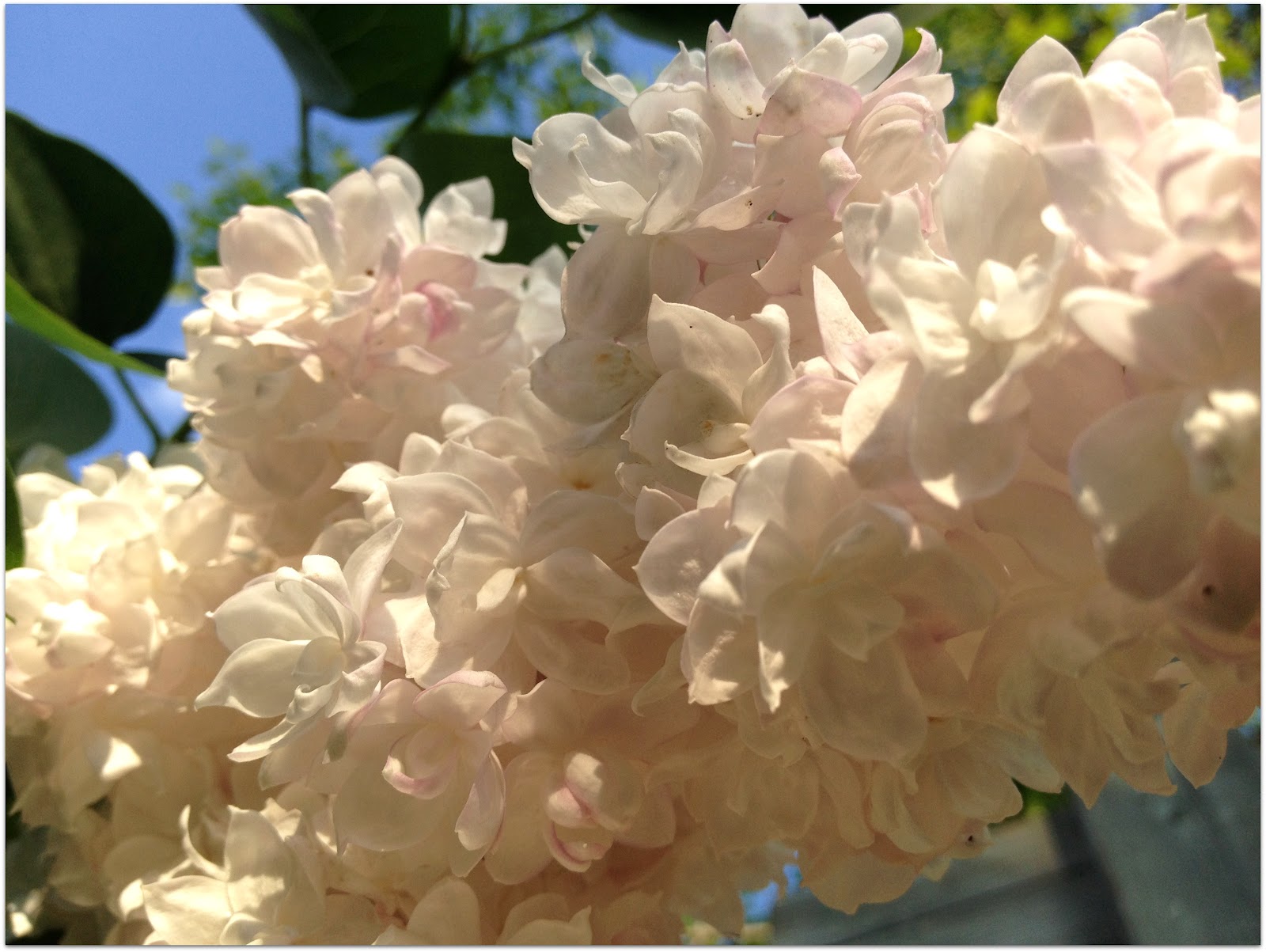
Lilac in bloom
9 June 2012

an edible back lane


Our back lane.

Yesterday, R built a new fence & gate along the back of the dog run. With that I now have a gate that I can open (the previous one was wobbly and tied together in such a way I couldn't manage it on my own), and access to the back lane.

M salvaged one of the pieces of the old fence to use as part of a fort for her two adventurous little men - it can be seen in this photo leaning against her back fence. She has plans for back lane raspberries, while I have plans for pumpkins. What will be next? Back lane chickens? ...we could only wish..


Saturday, June 9, 2012

Canary Columbine

5 June 2012


Aquilegia crysantha var. crysantha ~ Golden Columbine, Canary Columbine

A tender perennial here in Thunder Bay, the Golden Columbine is found growing vigorously in damp dapple lit areas in Texas and the southwestern States. It's in its second year in our front garden in nearly complete shade (other than an hour or so of morning sun). Columbines are members of the buttercup family. The Canary's delicate yellow blooms stand upright on stems reaching 20-50cm, with green foliage. My plant was touched by a little powdery mildew last year, so I'll have to keep a close eye on it this season. 

stamens reaching beyond the blades
9 June 2012

Wednesday, June 6, 2012

the kitchen garden (and dogs)

garlic chives
radishes
5 June 2012
Gromit Wensleydale Jackson
Chief Pea Inspector
R's incredible garden fence is coming along (ugh, that snow fence is killing me - literally. "A is for Amy who fell ..over the snow fence in the garden..." to change Edward Gorey's poem for a moment.) The cleverly curved wood to match the existing path is just beautiful. My man is incredible.
So, the fence is coming along, ...yesterday Dan aka 'Urban Greenspaces" came by and adopted the mugo pine and the white potentilla that were getting a little to snug side by side, and out of place in our new garden plan. It's outstanding what a difference is made to the landscape of our small yard with the removal of those two shrubs. There's less of a tunnelling effect, the space seems wider - rather than long and narrow. I stood out there this morning and took a deep breath from the steps. I'm in love with this garden.
Gromit W & Clifford the Big Red Dog
on the job
"The little kitchen garden" is what I'm calling the small plot tucked beside the porch. It's the hottest zone in our garden, thawed first, planted first, a cooker. Peppers and one sweet cherry tomato are filling in the space - and once these early peas finish they can move in there too. The rest of it is filled with herbs, my dear John Davis explorer rose, and this year: a sweet little Tangerine Thunbergia vine, who will climb to the second floor balcony on twine I tied one morning.
Tangerine Thunbergia
kale, chard

Tuesday, June 5, 2012

Weather Hypochondriacs

 Oh dear, here we go again. The Chronicle Journal spent Monday contradicting itself from one page to another. A regular victim of the 'global warming alarmist syndrome', our local newspaper should spend a little more time researching their trivia, and possibly do a little bit of unbiased investigative research.


On page A2:
"Today's Trivia
1932: A day of Muggy heat
(28.3C) spawned an electrical storm with heavy rain in
the Chaplin area of Saskatchewan. It flung utility poles across roads, blew down barns, coal sheds, and chicken coops (oh no!)...and overturned wagons. In Chaplin, the Alberta Pacific Elevator Company'soil house was lifted and carried several metres, and a building filled with barrels was left in the middle of the road.
World Environmental Day
Courtesy of the David Phillips, 2012 Weather Trivia Calendar"

...must have been "climate change" that caused that storm in 1932 - they just didn't have a fashionable name for it yet.

Two pages over, the CJ tells us that "climate change is very much upon us" because the East End flooded after some heavy rain. Obviously my heart goes out to all those who lost so much, but flooding shouldn't be unexpected in a place that was once, not long ago - geologically speaking, at the bottom of a Great Lake.

Our house here in Port Arthur was also once at the bottom of our Lake. Maybe someday it will be again. My first UofG hort course years ago had me running all over town tasting testing soil (yeah, I ate some...in the name of science!)... anyway, it gave me a great appreciation for our geological history from a garden soil perspective - most of which was once under water. This should be the perspective we view our City in, and respect that.

The alarmist perspective doesn't help. "Weather over the northwest is getting more erratic all the time." No it's not. It's always been erratic, changing - for about 4.5 billion years. Locally, I can point directly to the thoughtless and environmentally careless clear cutting around the Dog Lake area for changing the wind patterns in the City. ...just an observation from an observant gardener and greenhouse worker. It broke my heart when I saw what they did out there, just as it is over that ridiculous clover leaf at Hodder Avenue and 11/17. Do you not think that by changing that landscape we're not going to notice a change in the City of some sort? Some gardener somewhere will notice - or a cyclist riding along a bike lane - a new wind, a different water run-off...
This is not "global warming" that's changing anything in Thunder Bay - it's us. Stupid humans who think that they know more that mother nature, that a few trees here, and a little bit of the oldest rock on the planet won't be noticed if taken away and destroyed.

Winter and summer have been noticeably warmer and cooler many other times in the long & changing climate history here on the Canadian Shield. This is not something new and alarming CJ.., this is poorly researched, incorrect "journalism." It's interesting: I've been reading more and more about Medieval gardens - after my mother gave me a great historical gardening book for my birthday (Even from palliative care, she's still ordering books from Amazon using her iPad - which is hilarious, and so her. Love.) We are growing very similar gardens these days to those found in medieval England for similar social and cultural reasons (backyard veggies & self sustainability), and in a very similar climate. For years I've been intrigued by Shakespeare's flowers - all the same plant name I read on tags in greenhouses, in seed catalogues. It was some time last summer, we were driving - and on the radio they were talking about how so many medieval & renaissance still life paintings - or any painting that included vegetables, or meals featured this crazy looking purple carrots - just like we're seeing again now ...on the radio they were marvelling at this as if we should all be surprised. That surprised us, as we drove around.

Hannah's reading 1984 & Animal Farm and she thinks they're weird. (My mother ordered those books also - in a sweet hardcover that includes both books.) We've been trying to tell her that there are some good lessons in history - even more interesting when that history is looking into a future we've already passed. (Hey, where's my Tardis?!) If Thunder Bay is Manor Farm, I'd like to know when the pigs are going to take over...because maybe that's what it will have to take to stop the human's poor behaviour. Call it an environmental revolution, and look at it through eyes that have read how damaging ignorance and indifference can be.

If you want to know why our Lake is warming, infested, filthy, becoming increasingly unhealthy - take a look at your street, look at the run off water - and the cigarette butts that are in it. Even with our early spring, snow free roads, it took our Stupid Human City too long to get around to cleaning the streets this year - so much garbage everywhere, so much that could have been swept, ran off into our urban streams, into our Lake, on to cause problems that someday will be reported as shockingly alarming "climate change."

We put asphalt at the bottom of a Great Lake, buried the mineral rich soil beneath, we let garbage blow around on it, oil spill on it, waste fuel on it; we've taken away trees who have the roots to hold it all together - more than we stupid humans will ever have - real roots, a real connection from the sky to the soil. We've been so greedy in north-western Ontario - and continue to be, then we cry "climate change," rally, plant new trees, a garden, and think we're making a difference. But are we? Really? How can we justify that stupid clover leaf or what they're doing to the Lake Superior landscape with that highway expansion? This is not a global issue or the El Nino, or because we used too much aerosol hairspray in the eighties damaging the ozone - this is local - local stupidity and greed. Ignorance is bliss, isn't it.

How about a change in leadership. A new pig. Maybe we don't need councillors who doesn't think bike lanes are dangerous, waste time & money at the cost of our environment, and destroy our history (buildings, parks & landscape) for the sake of a parking lot for lazy people who think four blocks is the Boston Marathon.

::::deep breath::::

| More